SAVING STARLIGHT

Northern Lights over Silver Creek Pond at Shades State Park
The damp air sat heavy in the ravine. Sugar Creek rushed cold over eroded limestone, smelling of wet earth and pine needles. That is Shades State Park at 2:00 AM. We stood in the mud, waiting for our eyes to adjust to the pitch black.
Then the sky broke open. Neon green and bruised violet pulsed overhead in absolute silence. Oaks stood like black monoliths against a burning atmosphere. I had just finished Johan Eklöf’s The Darkness Manifesto, a grim look at how our obsession with artificial light wipes out nocturnal life. Watching the aurora borealis bleed across the Midwestern sky, I realized how rare true darkness has become. We are erasing the night without realizing what we lose.
Shooting the Midwest Aurora
You don’t need a flight to Iceland to photograph the Northern Lights. You need patience, a dark sky map, and a fast lens. I shot this event with a 14mm f/1.8. Lock your tripod down in the dirt. Manually focus on the brightest star you can find, and stop trusting autofocus in the dark.
The Urban Death Trap
Drive an hour south to Bloomington, and the sky hangs low like an oxidized orange canopy. Streetlights hum, and the noise of a college town drowns out the quiet. Up north in Indianapolis, billboards bleed aggressive blue light into the clouds. The city never sleeps. We equate light with safety, but to the local ecosystem, it means chaos.
Entomologists call it "The Vacuum Cleaner Effect." Moths, beetles, and hundreds of other nocturnal insects are pulled from the woods and pinned against floodlights. They orbit the glare until they drop from exhaustion. It’s a nightclub with no exit, where predators wait on the pavement below.
The Overlooked Workhorses

Milky Way on display at Negwegon State Park in Michigan
We ignore moths. We favor butterflies because they operate in daylight and look better on hiking brochures. But under the absolute blackness over Negwegon State Park, moths do the heavy lifting.
Fiona Matthews, Professor of Environmental Biology at the University of Sussex, points out that moths pollinate flowers faster than day-flying insects. They sustain Indiana’s evening primrose and wild petunia. The yucca plant relies so completely on the yucca moth that without it, the plant cannot reproduce. Moths also pollinate our agricultural backbone: soybeans, pumpkins, apples, pears, alfalfa, and grapes.
A 2017 study by German entomologists tracked a 75 percent drop in flying insect biomass over 27 years. That is not a minor shift; it is a systemic collapse. When insect populations crash, plant reproduction halts and the food web unravels.
Blinding the Night Shift
Starvation moves quickly up the chain. As humidity settles over the Indiana woods, bats drop from their roosts to hunt. Take the Indiana bat. Endangered and hanging on by a thread, it acts as a massive, unpaid pest control force. A single colony consumes millions of insects a night, saving farmers an estimated $900 million annually in crop damage. Yet bats still have worse PR than cockroaches.
We are killing them with suburban glow. Halogens and LED streetlamps override their navigation, strip away the dark, and make it difficult to hunt, mate, or migrate. Blinding a species in its own habitat is the ecological equivalent of trapping someone in a room with a strobe light.
Dimming the Cosmic Connection

Staring into the cosmos at Ka’ena Point
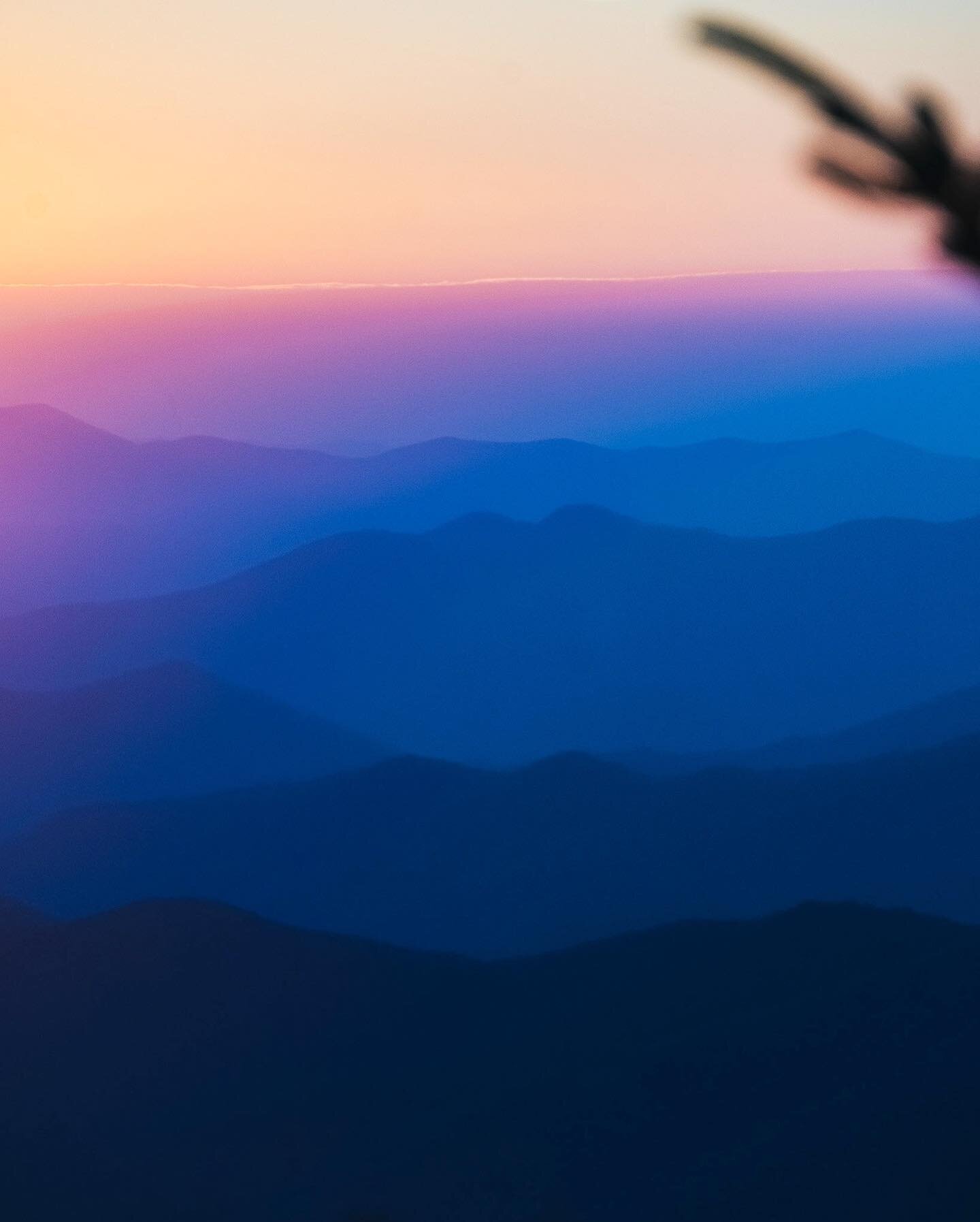
At Ka’ena Point, on the jagged volcanic tip of Oahu, the Pacific slams against basalt cliffs. With the moon hidden and the glow of Waikiki blocked by mountains, the sky opens into a heavy sheet of ancient light. Looking up forces a state of quiet insignificance.
The loss of the night sky is as much existential as ecological. For millennia, the stars guided explorers, marked agricultural seasons, and inspired art. Looking at them connects us to the universe as it was before us and as it will be after we leave. As Carl Sagan wrote, “We are a way for the universe to know itself.”
Now, that view is increasingly locked behind the paywall of distance and travel.
Field Notes: Shooting in Salt Spray
Coastal air will ruin your glass. Salt settles on the front element, creating a hazy, soft-focus blur. Wipe your lens with a fresh microfiber cloth between exposures, and keep your backup batteries sealed in your pack until you need them.
A Brighter Path Forward

Arches National Park in Arizona
We don't need a miracle to fix this. In 1958, Flagstaff, Arizona, shielded its streetlights and swapped blue glare for warm amber LEDs so astronomers at Lowell Observatory could view deep space. Flagstaff became the world's first International Dark Sky City, proving that a modern town can maintain safety without drowning out the Milky Way.
The fix requires simple choices:
Swap harsh white porch floodlights for warm, shielded bulbs.
Put security lights on motion sensors so they burn only when needed.
Support dark sky zoning in your county.
The cosmos is still up there, waiting for us to turn down the glare. Pack a red-lens headlamp, drive past the urban hum, cut your engine, and stand in the cold air. Let your eyes adjust to the black. Protecting the night sky is simply a refusal to forget our place in the universe.
Keep Exploring: If you want to experience true, heavy darkness close to home, check out my guide to Hemlock Cliffs: Indiana’s Hidden Rainforest. If you are looking to capture these skies yourself, read through my raw, unedited failures and technical fixes in Beginners Mind: What I Learned from My Worst Photos.
Sources
Ecological Consequences of Artificial Night Lighting. Catherine Rich & Travis Longcore (eds). 2006. Island Press. Pages 281-304.
Hallmann, C. A., Sorg, M., Jongejans, E., Siepel, H., Hofland, N., Schwan, H., ... & de Kroon, H. (2017). More than 75 percent decline over 27 years in total flying insect biomass in protected areas. PLOS ONE, 12(10), e0185809. https://doi.org/10.1371/journal.pone.0185809
Indiana Department of Natural Resources, Division of Fish and Wildlife. "Northern Long-Eared Bat and Other Forest Bats in Indiana." in.gov, https://www.in.gov/dnr/fish-and-wildlife/files/fo-Northern_LE_and_other_forest_bats.pdf. Accessed 7 June 2024.
"The shocking environmental impact of treating wastewater with ‘forever chemicals’." University of Sussex, 24 May 2023, https://www.sussex.ac.uk/broadcast/read/60568. Accessed 7 June 2024.